
Grow
Roles and reporting structure
Who owns what, who answers to whom, and where the handoffs land.
In a lot of businesses, the structure is informal. People worked out who handles what over time, and it holds together because the people who’ve been there a while have learned it. But nobody has the whole picture, and a lot of it has never been said out loud.
It shows up fastest with a new hire, who doesn’t know who to ask about anything, so they guess, ask the wrong person or sit on a question for a week. It shows up elsewhere too: two people both think a task is theirs, something falls between roles until a customer notices, or a decision waits because nobody’s sure whose call it is.
None of this means the structure is wrong. It means nobody has ever put the whole picture in one place.
The map only exists in pieces
Putting the whole picture in one place
What I do
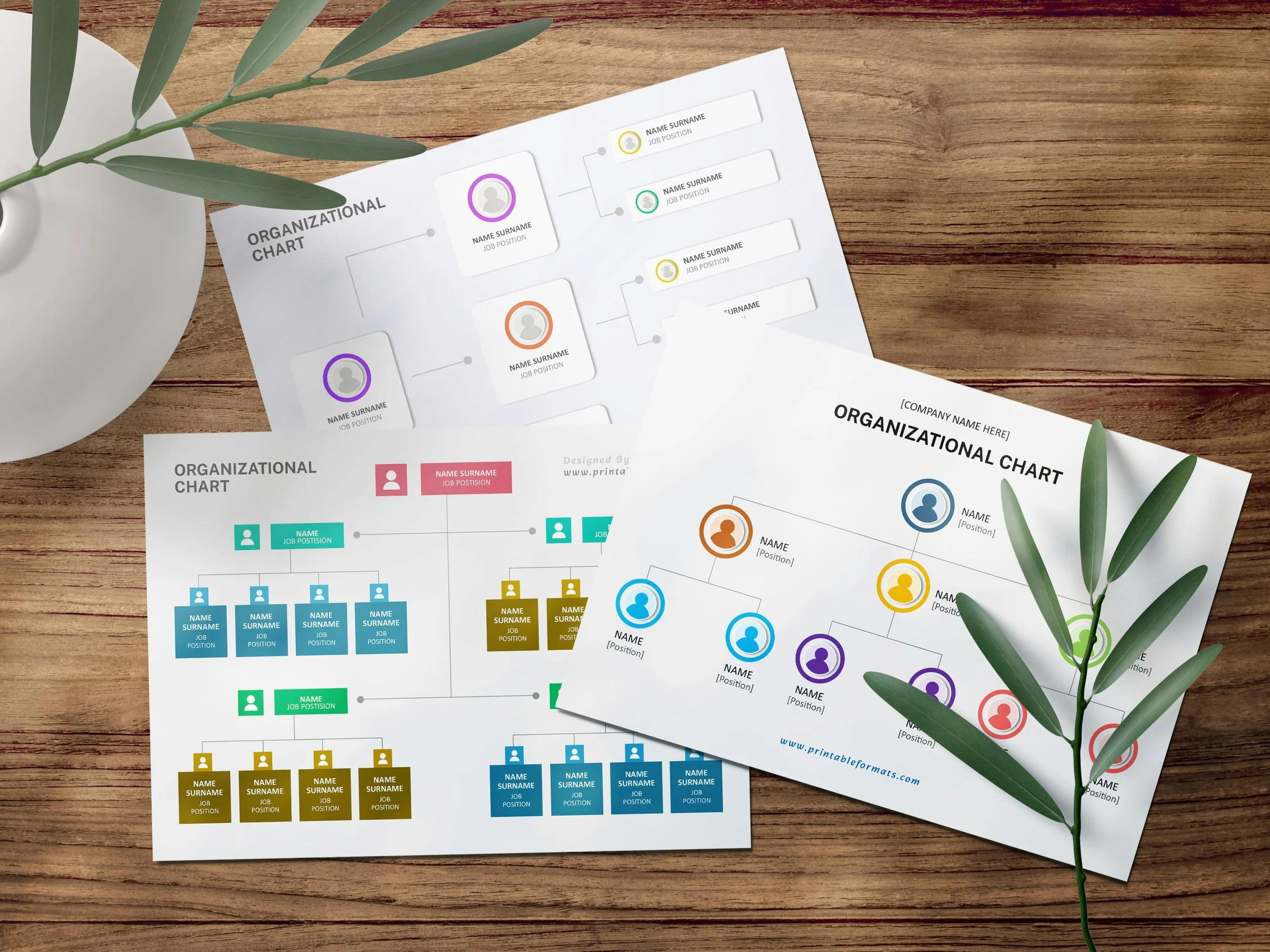
I sit down with you and with the people doing the jobs, because those two accounts are rarely identical. Then I map what’s actually happening: who does what, who decides what, where work passes between people and which parts nobody has claimed. You get an org chart and plain-language role descriptions that say clearly what each person owns.
What it changes
Fewer dropped balls and faster decisions, but also something quieter. People want to know what they’re responsible for, and working without a clear scope is stressful. Writing it down tells your team their role is real and considered. It also shows up for clients: a team that knows what it owns looks like a business that has its act together.
That map almost always surfaces a few things worth talking about: a role that’s absorbed three jobs because one person kept saying yes, a decision routed to you that shouldn’t need to be, or two people quietly duplicating each other.
What this usually includes
Interviews with you and with the team
Mapping current roles, ownership, and decision rights
Identifying gaps, overlaps, and unowned work
An org chart that reflects how the business actually runs
Plain-language role descriptions
Clarifying who decides what, and at what threshold
Documenting handoffs between roles
A structure that has room for the next hire
Most clients bring me in for more than one piece. Clear roles usually go hand in hand with written processes and smoother onboarding.
See SOP documentation · See hiring and onboarding · See operations support
Not sure who owns what?
Tell me where things are getting dropped or duplicated. That's usually where the structure needs clarifying.